Did you know that 89% of confined space fatalities occurred with jobs authorized by supervisors, and 80% of fatalities happened in locations that had been previously entered by the same person who later died? Now is the right time to complete your Confined Space standards-based training. National OSHA Foundation training and course content will help you navigate through the standard and ensure you are fully prepared to take on your job with confidence.
This course is offered by 360training. National OSHA Foundation is owned and operated by 360training.
Available on any device. 24/7.
Work anytime, anywhere, at your own pace, and when you feel comfortable with the material, you can then take the final exam. Includes three (3) exam attempts. After passing the final exam, you will be able to download your certificate of completion.
Stay OSHA-Aligned
The confined space training program has been developed in accordance with OSHA standards. We help you avoid penalties & injuries by ensuring the highest quality training material available.
Trusted and Accepted
Join the thousands of organizations both small and large who have trained workers.
This course was able to provide me with the knowledge and certification necessary to land my job and it has given me confidence in taking on the every day stresses my work presents!
Mario P.
Pipeline Worker
Toyota’s number one priority is safety. Managing a manufacturing campus of 10,000 employees, OSHA compliance is something we take very seriously. Confined Space protocols and training is paramount, therefore we mandate all necessary personnel be competent and certified.
Kevin E.
Safety Manager - Toyota
Getting Started is Simple
We’ve made it easy to meet the OSHA-recommended training requirements
1
Enroll your employees or yourself in the training by clicking here
Available in English & Spanish
Easily assign training to employees & conveniently track their progress
2
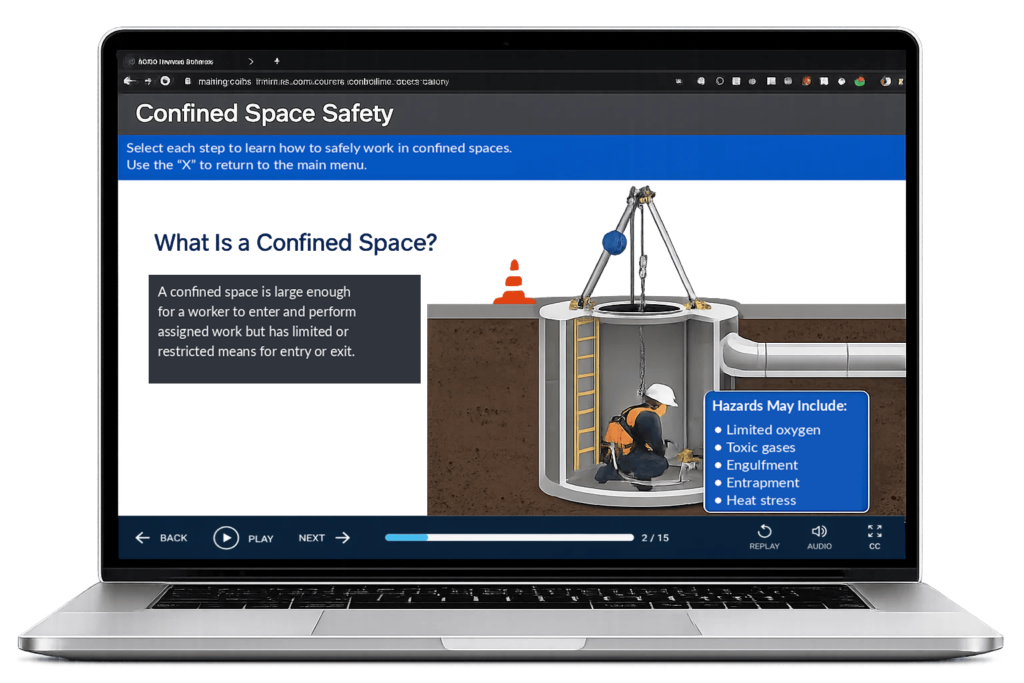
Complete the 2.5-hour online curriculum and test
Multiple exam attempts
No time limit
High-quality interactive training
3
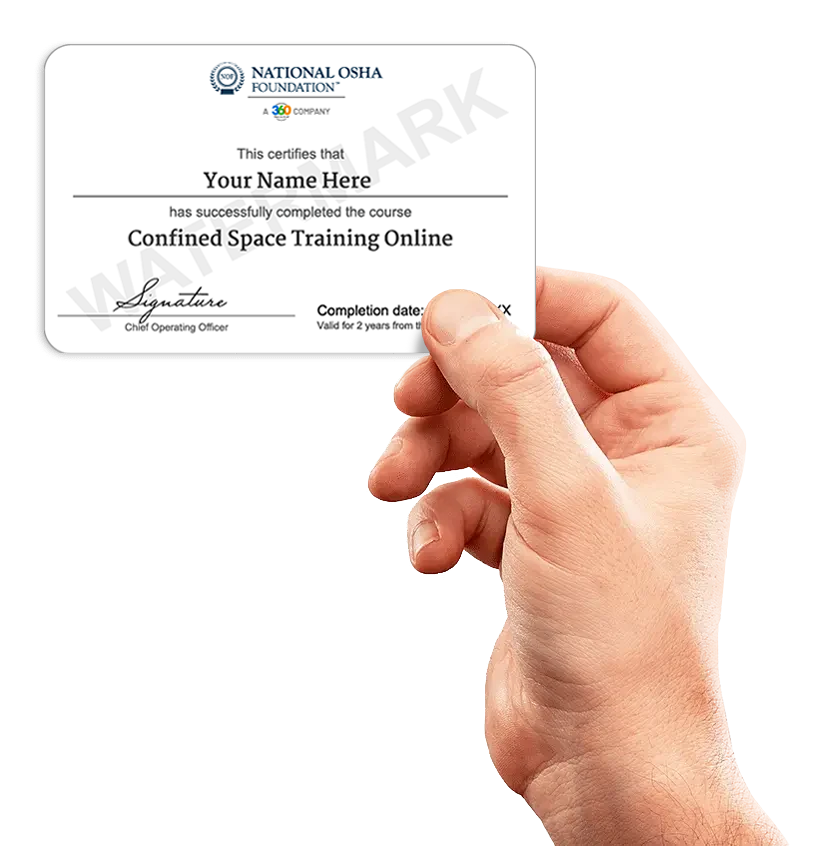
Automatically print certificate of completion & onsite evaluation checklist
Certificate Valid For 3 Years
Easily verify certificates with unique certificate numbers and QR codes
Avoid penalties and fines, including OSHA-imposed fines for each untrained operator
Many workplaces contain spaces that are considered “confined” because of their configurations. A confined space is large enough and configured in such a way that you can enter and perform assigned work. A confined space has a limited or restricted means of entrance or exit, and a configuration that can make first aid, rescue, evacuation, or other emergency response activities difficult. They are not designed or intended for continuous occupancy.
Anyone entering and employees entering and working within a confined space, and attendants – those persons tasked with assisting with the entry, but not actually entering themselves.
Identify characteristics and examples of a confined space
Identify the potential hazards of a permit-required confined space
Recognize the difference between a permit-required confined space and a non-permit-required confined space, as well as the criteria for reclassifying a confined space
Identify your employer’s responsibility to establish and implement safety procedures and protocols for working in and around permit-required confined spaces
Recognize the criteria on an entry permit
Identify the hazard controls that must be implemented before entering a permit-required confined space
Recognize the responsibilities of personnel who work in or attend permit-confined spaces
Identify rescue resources and how to plan for emergencies